


You are using an out of date browser. It may not display this or other websites correctly.
You should upgrade or use an alternative browser.
You should upgrade or use an alternative browser.
OT: American Politics
- Thread starter MindzEye
- Start date

MindzEye
Wayward Ditch Pig
Depends on the state.
They're referred to as Talibangelicals for good reason.
MindzEye
Wayward Ditch Pig
AP NewsBreak: The U.S. Army has moved in recent weeks to discharge dozens of immigrant recruits and reservists who enlisted through a program that promised them a path to citizenship.
Heh. But sure, this is all about illegal immigration and not institutional racism.

CH1
The Artist Formerly Known as chiggins.
nothing he has said or done gives me the impression he is smart enough to do this
He's at least smart enough to take part in a con.
CH1
The Artist Formerly Known as chiggins.
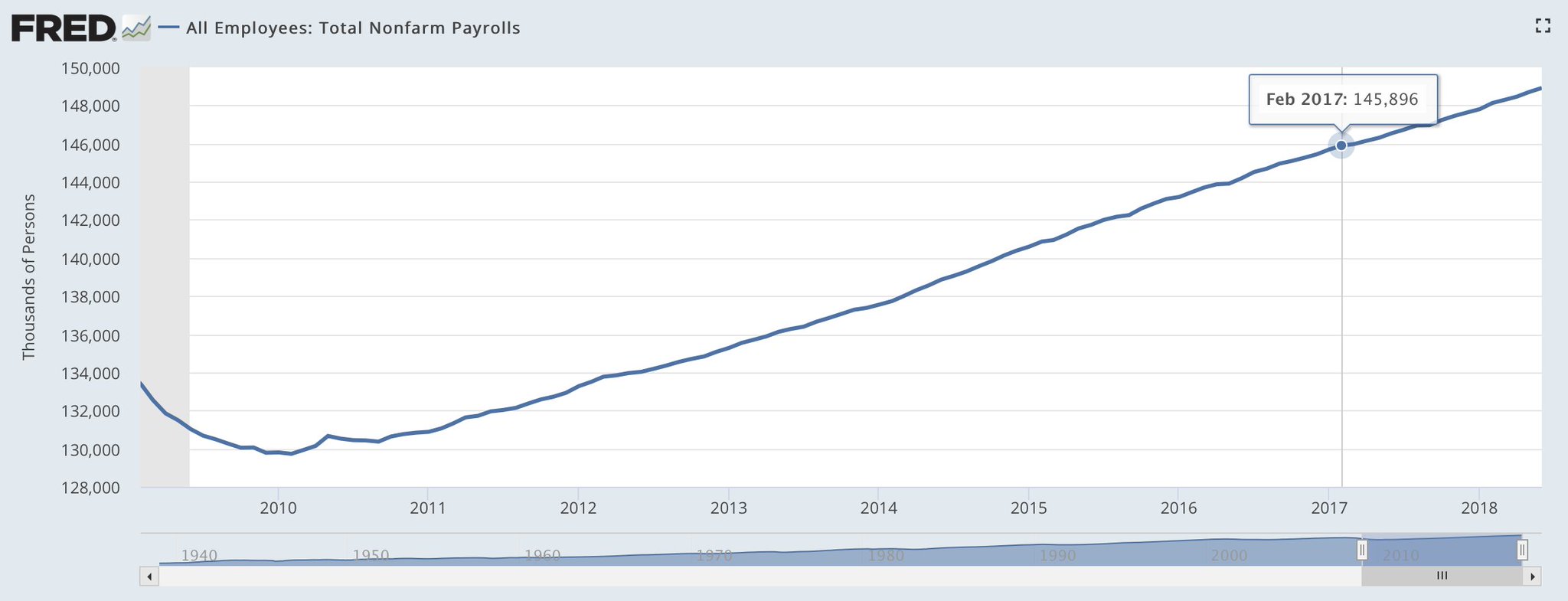
I think you're over estimating the support that got him into the white house. It took a historically unpopular democrat with ~30 yrs of public baggage and a poorly run campaign for Trump to sneak into office by about 85,000 votes almost perfectly placed. He's done nothing to endear himself to the masses since and his numbers show it. Disapproval is up 10% since he barely took office and approval is down 5%. That all occurred while he was riding a booming economy and taking credit for it at every turn.
This. People have this amazing ability to forget the detailed boxscore and lazily remember who won. It's done in sports all the time. Team Canada lost an international competition in triple OT and we started a federal commission on "what's wrong with our game"

mbow30
Spudmeister Supreme
You just know Rosenstein had this dug up as a **** you to Jordan. The two really dislike each other. It’s a very J. Edgar type move.
Somebody did but I doubt that person was rosenstein. Nothing he has done should have anybody questioning his integrity.
CH1
The Artist Formerly Known as chiggins.
I consider Trump's victory a black swan event (he wasn't even supposed to win the GOP nomination). In hindsight, because humans are fooled by randomness, there's a number of reasons why his victory should have been foreseen and many more reasons why his 2020 victory seems inevitable.
MindzEye
Wayward Ditch Pig
I like Nassim Taleb!!!!
Fyp bro
CH1
The Artist Formerly Known as chiggins.
Fyp bro
Nassim is a little annoying but I like some of his work.
CH1
The Artist Formerly Known as chiggins.
BTW, Ben Hunt is one of my favourite follows
Ben Hunt
@EpsilonTheory
It’s taking DJT more and more cartoonification energy to create a smaller and smaller narrative impulse. Time to start building a political short position in Trumpism.
@realDonaldTrump
A vote for Democrats in November is a vote to let MS-13 run wild in our communities, to let drugs pour into our cities, and to take jobs and benefits away from hardworking Americans. Democrats want anarchy, amnesty and chaos - Republicans want LAW, ORDER and JUSTICE!
Ben Hunt
@EpsilonTheory
In both capital and political markets, the second derivative is *everything*. It’s not your speed that matters, it’s your acceleration. DJT’s Narrative second derivative has flipped negative.
Ben Hunt
@EpsilonTheory
It’s taking DJT more and more cartoonification energy to create a smaller and smaller narrative impulse. Time to start building a political short position in Trumpism.
@realDonaldTrump
A vote for Democrats in November is a vote to let MS-13 run wild in our communities, to let drugs pour into our cities, and to take jobs and benefits away from hardworking Americans. Democrats want anarchy, amnesty and chaos - Republicans want LAW, ORDER and JUSTICE!
Ben Hunt
@EpsilonTheory
In both capital and political markets, the second derivative is *everything*. It’s not your speed that matters, it’s your acceleration. DJT’s Narrative second derivative has flipped negative.

zeke
Well-known member
this secret gop-only Russia trip getting weirder and weirder....
https://twitter.com/MikePettigano/status/1014892859500228608
https://twitter.com/MikePettigano/status/1014892859500228608

lecoqsportif
Well-known member
I’ll bet. Cultivation. Check out that book by Snyder.
It’s bananas.
It’s bananas.

uncus
Well-known member
Good book
Inside the anger that gave us Trump — and that will long outlast him
"Age of Anger: A History of the Present"
With President Trump in office, Timothy Snyder writes, “The minor choices we make are themselves a kind of vote.” (Photo by Jabin Botsford/The Washington Post)
AGE OF ANGER: A History of the Present
However long the Donald Trump presidency is with us — eight years, four years or less — the forces that propelled him to power will not dissipate with his departure. If anything, without Trump as a focal point galvanizing supporters and opponents, those forces may become harder to control, channel or even understand.
Economic grievances and racial animus compete as the two shorthand explanations for Trump’s rise, and among the president’s liberal critics, it is a near article of faith that the former rationale is overly generous, while the latter is more accurate and (bonus!) more damning. After all, it is simpler and more righteous to call out the horrifying rhetoric of pro-Trump white nationalists than to Piketty your way through diagnoses and remedies for economic inequality.
Pankaj Mishra’s “Age of Anger” is a book about many things, a sort of intellectual history of history itself. But if there is one convincing conclusion that emanates from these pages, it is that these alternative explanations are not competing; in fact, they are barely alternatives. The two are bound together, reinforcing each other in cycles that long pre-date the Trump phenomenon.
(Farrar, Straus and Giroux)
What the world has endured in the quarter-century since the end of the Cold War — the triumph of political liberty and economic globalization, only to be followed by financial crises, populist movements and transnational terrorism — is but the latest iteration, on a wider scale, of what has happened for centuries. “The unprecedented political, economic and social disorder that accompanied the rise of the industrial capitalist economy in nineteenth century Europe, and led to world wars, totalitarian regimes and genocide in the first half of the twentieth century, is now infecting much vaster regions and bigger populations,” Mishra writes. “Societies organized for the interplay of individual self-interest can collapse into manic tribalism, if not nihilistic violence.”
Those impulses can take the form of 18th-century revolutions, 19th-century anarchist movements, 20th-century ethnic cleansing, and 21st-century terrorism and nationalism. Viciousness and prejudice flow from economic dislocation, and in turn feed it. History privileges no right side, and its arc can bend so far that it loops back upon us.
“Now with the victory of Donald Trump,” Mishra writes, “it has become impossible to deny or obscure the great chasm . . . between an elite that seizes modernity’s choicest fruits while disdaining older truths and uprooted masses, who, on finding themselves cheated of the same fruits, recoil into cultural supremacism, populism and rancorous brutality.”
There is nothing worse than partial modernity. And all modernity, it turns out, is partial.
***
Mishra is a fellow of the Royal Society of Literature, and he writes like he’s trying to remind you of that. Every novel or manifesto by some 19th-century Russian philosopher, post-Enlightenment Italian literati wannabe or Hindu nationalist ideologue merits a few pages or at least a few sentences. Straddling the line between erudition and showing off, this book makes you feel smarter for having read it, even if you feel a little stupid first.
Mishra paints in thick, furious strokes, then lingers on minute details. Together, the French and Industrial revolutions conspired to produce capitalist modernization, “the universalist creed that glorified the autonomous rights-bearing individual and hailed his rational choice-making capacity as freedom,” Mishra writes. Faith in science, economics and rationality began to overpower faith in, well, faith, as Enlightenment thinkers “hoped to apply the scientific method discovered in the previous century to phenomena beyond the natural world, to government, economics, ethics, law, society.” This new faith would also yield the cult of “development” — equating progress with the inexorable advance of science and industry, and the requisite downgrading of tradition and religion.
If that had worked, this book would not exist. However, “instead of harmonizing socially mediated interests,” Mishra writes, “an increasingly industrialized economy created class antagonisms and gross inequalities.” Fyodor Dostoyevsky grasped the conflict; Mishra recalls how, during a visit to Paris, the Russian writer caustically concluded that “liberté” was just for millionaires, “égalité” did no
Inside the anger that gave us Trump — and that will long outlast him
"Age of Anger: A History of the Present"
With President Trump in office, Timothy Snyder writes, “The minor choices we make are themselves a kind of vote.” (Photo by Jabin Botsford/The Washington Post)
AGE OF ANGER: A History of the Present
However long the Donald Trump presidency is with us — eight years, four years or less — the forces that propelled him to power will not dissipate with his departure. If anything, without Trump as a focal point galvanizing supporters and opponents, those forces may become harder to control, channel or even understand.
Economic grievances and racial animus compete as the two shorthand explanations for Trump’s rise, and among the president’s liberal critics, it is a near article of faith that the former rationale is overly generous, while the latter is more accurate and (bonus!) more damning. After all, it is simpler and more righteous to call out the horrifying rhetoric of pro-Trump white nationalists than to Piketty your way through diagnoses and remedies for economic inequality.
Pankaj Mishra’s “Age of Anger” is a book about many things, a sort of intellectual history of history itself. But if there is one convincing conclusion that emanates from these pages, it is that these alternative explanations are not competing; in fact, they are barely alternatives. The two are bound together, reinforcing each other in cycles that long pre-date the Trump phenomenon.
(Farrar, Straus and Giroux)
What the world has endured in the quarter-century since the end of the Cold War — the triumph of political liberty and economic globalization, only to be followed by financial crises, populist movements and transnational terrorism — is but the latest iteration, on a wider scale, of what has happened for centuries. “The unprecedented political, economic and social disorder that accompanied the rise of the industrial capitalist economy in nineteenth century Europe, and led to world wars, totalitarian regimes and genocide in the first half of the twentieth century, is now infecting much vaster regions and bigger populations,” Mishra writes. “Societies organized for the interplay of individual self-interest can collapse into manic tribalism, if not nihilistic violence.”
Those impulses can take the form of 18th-century revolutions, 19th-century anarchist movements, 20th-century ethnic cleansing, and 21st-century terrorism and nationalism. Viciousness and prejudice flow from economic dislocation, and in turn feed it. History privileges no right side, and its arc can bend so far that it loops back upon us.
“Now with the victory of Donald Trump,” Mishra writes, “it has become impossible to deny or obscure the great chasm . . . between an elite that seizes modernity’s choicest fruits while disdaining older truths and uprooted masses, who, on finding themselves cheated of the same fruits, recoil into cultural supremacism, populism and rancorous brutality.”
There is nothing worse than partial modernity. And all modernity, it turns out, is partial.
***
Mishra is a fellow of the Royal Society of Literature, and he writes like he’s trying to remind you of that. Every novel or manifesto by some 19th-century Russian philosopher, post-Enlightenment Italian literati wannabe or Hindu nationalist ideologue merits a few pages or at least a few sentences. Straddling the line between erudition and showing off, this book makes you feel smarter for having read it, even if you feel a little stupid first.
Mishra paints in thick, furious strokes, then lingers on minute details. Together, the French and Industrial revolutions conspired to produce capitalist modernization, “the universalist creed that glorified the autonomous rights-bearing individual and hailed his rational choice-making capacity as freedom,” Mishra writes. Faith in science, economics and rationality began to overpower faith in, well, faith, as Enlightenment thinkers “hoped to apply the scientific method discovered in the previous century to phenomena beyond the natural world, to government, economics, ethics, law, society.” This new faith would also yield the cult of “development” — equating progress with the inexorable advance of science and industry, and the requisite downgrading of tradition and religion.
If that had worked, this book would not exist. However, “instead of harmonizing socially mediated interests,” Mishra writes, “an increasingly industrialized economy created class antagonisms and gross inequalities.” Fyodor Dostoyevsky grasped the conflict; Mishra recalls how, during a visit to Paris, the Russian writer caustically concluded that “liberté” was just for millionaires, “égalité” did no
Last edited:

Habsy
Just Walking About Aimlessly
I think you're over estimating the support that got him into the white house. It took a historically unpopular democrat with ~30 yrs of public baggage and a poorly run campaign for Trump to sneak into office by about 85,000 votes almost perfectly placed. He's done nothing to endear himself to the masses since and his numbers show it. Disapproval is up 10% since he barely took office and approval is down 5%. That all occurred while he was riding a booming economy and taking credit for it at every turn.
So looking over the map Trump won...
https://www.270towin.com/maps/2016-actual-electoral-map
Trump won with 306.
That means he could afford to lose OH and MI or OH and WI. He can't lose both OH and PA.
The fact that he won with 306 (and I fully get the 85000 well placed vote argument) means he has some wiggle room there. There are still a bunch of combinations available to him to pull it off. It's going to boil down to his opponent.
The good news for the Dems is that the 232 Clinton won are secure and likely in the bank for the next candidate. I don't see any of them flipping. Maybe MN or NV are the closest but I don't see either doing so. The Dems definitely know which states they need to focus on.
MindzEye
Wayward Ditch Pig
So looking over the map Trump won...
https://www.270towin.com/maps/2016-actual-electoral-map
Trump won with 306.
That means he could afford to lose OH and MI or OH and WI. He can't lose both OH and PA.
The fact that he won with 306 (and I fully get the 85000 well placed vote argument) means he has some wiggle room there. There are still a bunch of combinations available to him to pull it off. It's going to boil down to his opponent.
The good news for the Dems is that the 232 Clinton won are secure and likely in the bank for the next candidate. I don't see any of them flipping. Maybe MN or NV are the closest but I don't see either doing so. The Dems definitely know which states they need to focus on.
And that's just it, Trump is polling poorly in the states that we won by a **** hair in 2016. So if he won by a **** hair in Penn, is is down 7-8% in Penn since then....???
He's down in Ohio after winning by a **** hair. He's down under 40% approval in Michigan after yet again winning by a **** hair. He's down less in Wisconsin (about 5%) but only won Wisconsin by 30,000 votes. He's down a bit in some other states that he won by thin margins as well (Florida specifically)
I honestly don't see how he has "wiggle" room when you look at how incredible the chain of events were that won him the presidency. It was razor thin victory after razor thin victory on election night in just about every toss up state. For Trump to win again, the Democrats will have to snatch defeat from the jaws of victory again. They'll have to show that they learned nothing from how this one trick pony huckster won the office.
Which is sadly, entirely possible. But run a decent candidate in a competent campaign and it's lights out, probably a landslide.

Altair
Well-known member
I am very curious to find out who will be the candidate for the democrats.And that's just it, Trump is polling poorly in the states that we won by a **** hair in 2016. So if he won by a **** hair in Penn, is is down 7-8% in Penn since then....???
He's down in Ohio after winning by a **** hair. He's down under 40% approval in Michigan after yet again winning by a **** hair. He's down less in Wisconsin (about 5%) but only won Wisconsin by 30,000 votes. He's down a bit in some other states that he won by thin margins as well (Florida specifically)
I honestly don't see how he has "wiggle" room when you look at how incredible the chain of events were that won him the presidency. It was razor thin victory after razor thin victory on election night in just about every toss up state. For Trump to win again, the Democrats will have to snatch defeat from the jaws of victory again. They'll have to show that they learned nothing from how this one trick pony huckster won the office.
Which is sadly, entirely possible. But run a decent candidate in a competent campaign and it's lights out, probably a landslide.
MindzEye
Wayward Ditch Pig
I am very curious to find out who will be the candidate for the democrats.
Yep. Has to be someone who has a touch of charisma, but someone with a backbone who can/will walk into a debate with Trump and call him a ****ing liar and continually smash on his lies. Hillary dismantled him in the debates intellectually, but it didn't matter because facts don't matter as much as they should. The Dems need to find their candidate a set of lines and ideas that stick with the undecideds and just ****ing mercilessly skewer him on live TV.
Basically, they need to do to Trump what Biden did to Ryan.
[video=youtube;CptqDRfn_-M]https://www.youtube.com/watch?v=CptqDRfn_-M[/video]