

You are using an out of date browser. It may not display this or other websites correctly.
You should upgrade or use an alternative browser.
You should upgrade or use an alternative browser.
OT: The News Thread
- Thread starter MindzEye
- Start date


MindzEye
Wayward Ditch Pig

vermettefan
Member
Re: OT - The News Thread
[ame="http://www.youtube.com/watch?v=Xo-iZZW_09A"]YouTube- Explosive Accusations About Canadian Military In Afghanistan![/ame]
[ame="http://www.youtube.com/watch?v=Xo-iZZW_09A"]YouTube- Explosive Accusations About Canadian Military In Afghanistan![/ame]

JaysCyYoung
Legend
Re: OT - The News Thread
Nice to see that the CBC is slagging the Canadian Forces yet again.
Nice to see that the CBC is slagging the Canadian Forces yet again.

LeafGm
Well-known member
Re: OT - The News Thread
Yeah, because accusations like that should totally just be swept under the carpet.Nice to see that the CBC is slagging the Canadian Forces yet again.
JaysCyYoung
Legend
Re: OT - The News Thread
I know several people that completed several tours over in Kandahar and this isn't the first time that I've heard this "Pasha's" name come up. Apparently he's a lying scumbag that has gotten CF personnel into some pretty sticky situations with villagers based on his translations before.
I know several people that completed several tours over in Kandahar and this isn't the first time that I've heard this "Pasha's" name come up. Apparently he's a lying scumbag that has gotten CF personnel into some pretty sticky situations with villagers based on his translations before.
LeafGm
Well-known member
Re: OT - The News Thread
If he is indeed a lying scumbag, then let's get him out in public, investigate his claims and expose him for the lying scumbag he is. But you can't simply ignore the accusations he's making, and not report them. Hell, they even noted at the end of that report that he may not be a reliable source of information, and may have ulterior motives for what he's saying (anger against the government, wanting to get his family over here from Afghanistan).I know several people that completed several tours over in Kandahar and this isn't the first time that I've heard this "Pasha's" name come up. Apparently he's a lying scumbag that has gotten CF personnel into some pretty sticky situations with villagers based on his translations before.
MindzEye
Wayward Ditch Pig
Re: OT - The News Thread
This
You simply can't ignore accusations of this nature. If they're proven to be false, they actually strengthen the public opinion of the armed forces...and if they're true, they'll spark the public outrage necessary for the politicians to make necessary changes to how our military conducts itself.
If he is indeed a lying scumbag, then let's get him out in public, investigate his claims and expose him for the lying scumbag he is. But you can't simply ignore the accusations he's making, and not report them. Hell, they even noted at the end of that report that he may not be a reliable source of information, and may have ulterior motives for what he's saying (anger against the government, wanting to get his family over here from Afghanistan).
This
You simply can't ignore accusations of this nature. If they're proven to be false, they actually strengthen the public opinion of the armed forces...and if they're true, they'll spark the public outrage necessary for the politicians to make necessary changes to how our military conducts itself.
JaysCyYoung
Legend
Re: OT - The News Thread
I think those are valid points. I just really, really, really dislike the way CBC tries to sensationalize things to suit their political viewpoint. They were a major component of turning the public sentiment against the Canadian Forces after the Somalia Affair and I haven't liked a few of their previous pieces on Afghanistan.
I think those are valid points. I just really, really, really dislike the way CBC tries to sensationalize things to suit their political viewpoint. They were a major component of turning the public sentiment against the Canadian Forces after the Somalia Affair and I haven't liked a few of their previous pieces on Afghanistan.
MindzEye
Wayward Ditch Pig
Re: OT - The News Thread
Honestly, I think the proper position of the press is to be overly skeptical of any military intervention in a foreign country Jays. There is simply too rich and colourful a history of atrocities in those situations by the foreign forces involved.
Ask a shit load of questions and be skeptical of the answers until sufficient proof is provided. It's the the proper role of the press in a functioning democracy. Continually question power, and make them prove themselves sufficiently.
Honestly, I think the proper position of the press is to be overly skeptical of any military intervention in a foreign country Jays. There is simply too rich and colourful a history of atrocities in those situations by the foreign forces involved.
Ask a shit load of questions and be skeptical of the answers until sufficient proof is provided. It's the the proper role of the press in a functioning democracy. Continually question power, and make them prove themselves sufficiently.
JaysCyYoung
Legend
Re: OT - The News Thread
Par for the course from that lying slimeball.
But Malgarai Ahmadshah, former language and cultural adviser to the commander of Canada’s Joint Task Force Afghanistan unit, acknowledged that much of his information was second hand and he couldn’t offer any proof to back up his claims.
He also wouldn’t repeat his allegations outside the committee room, where he was no longer protected by parliamentary privilege.
Par for the course from that lying slimeball.
MindzEye
Wayward Ditch Pig
Re: OT - The News Thread
Extremely interesting new method of resuscitation showing serious, serious promise.
http://www.newsweek.com/id/35045
Extremely interesting new method of resuscitation showing serious, serious promise.
http://www.newsweek.com/id/35045
Consider someone who has just died of a heart attack. His organs are intact, he hasn't lost blood. All that's happened is his heart has stopped beating—the definition of "clinical death"—and his brain has shut down to conserve oxygen. But what has actually died?
As recently as 1993, when Dr. Sherwin Nuland wrote the best seller "How We Die," the conventional answer was that it was his cells that had died. The patient couldn't be revived because the tissues of his brain and heart had suffered irreversible damage from lack of oxygen. This process was understood to begin after just four or five minutes. If the patient doesn't receive cardiopulmonary resuscitation within that time, and if his heart can't be restarted soon thereafter, he is unlikely to recover. That dogma went unquestioned until researchers actually looked at oxygen-starved heart cells under a microscope. What they saw amazed them, according to Dr. Lance Becker, an authority on emergency medicine at the University of Pennsylvania. "After one hour," he says, "we couldn't see evidence the cells had died. We thought we'd done something wrong." In fact, cells cut off from their blood supply died only hours later.
But if the cells are still alive, why can't doctors revive someone who has been dead for an hour? Because once the cells have been without oxygen for more than five minutes, they die when their oxygen supply is resumed.
With this realization came another: that standard emergency-room procedure has it exactly backward. When someone collapses on the street of cardiac arrest, if he's lucky he will receive immediate CPR, maintaining circulation until he can be revived in the hospital. But the rest will have gone 10 or 15 minutes or more without a heartbeat by the time they reach the emergency department. And then what happens? "We give them oxygen," Becker says. "We jolt the heart with the paddles, we pump in epinephrine to force it to beat, so it's taking up more oxygen." Blood-starved heart muscle is suddenly flooded with oxygen, precisely the situation that leads to cell death. Instead, Becker says, we should aim to reduce oxygen uptake, slow metabolism and adjust the blood chemistry for gradual and safe reperfusion.
A study at four hospitals, published last year by the University of California, showed a remarkable rate of success in treating sudden cardiac arrest with an approach that involved, among other things, a "cardioplegic" blood infusion to keep the heart in a state of suspended animation. Patients were put on a heart-lung bypass machine to maintain circulation to the brain until the heart could be safely restarted. The study involved just 34 patients, but 80 percent of them were discharged from the hospital alive. In one study of traditional methods, the figure was about 15 percent.
JaysCyYoung
Legend
Re: OT - The News Thread
That's absolutely incredible. How many people have we needlessly had a hand in killing through the old methods of rescucitation?
That's absolutely incredible. How many people have we needlessly had a hand in killing through the old methods of rescucitation?

Hoss
Well-known member
Re: OT - The News Thread
so what the hell do you do??? just let the guy chill out after a heart attack... how the hell does another person slow metabolism and adjust blood chemistry on the street???
a hospital yes, but it doesn't help the regular bystander who wants to help.
so what the hell do you do??? just let the guy chill out after a heart attack... how the hell does another person slow metabolism and adjust blood chemistry on the street???
a hospital yes, but it doesn't help the regular bystander who wants to help.
JaysCyYoung
Legend
Re: OT - The News Thread
The regular bystander is useless 95 percent of the time (the actual figure), even while attempting CPR. So it's negligible in any case.
The regular bystander is useless 95 percent of the time (the actual figure), even while attempting CPR. So it's negligible in any case.
MindzEye
Wayward Ditch Pig
Re: OT - The News Thread
It would appear that the only use the regular bystander has in that type of situation is to get that person in the hands of professional medical assistance as soon as possible and make sure that nobody else attempts to practice CPR on them.
If the results of the small study hold true, the rush rush mentality we've always been taught of getting the victim breathing ASAP is just wrong.
so what the hell do you do??? just let the guy chill out after a heart attack... how the hell does another person slow metabolism and adjust blood chemistry on the street???
a hospital yes, but it doesn't help the regular bystander who wants to help.
It would appear that the only use the regular bystander has in that type of situation is to get that person in the hands of professional medical assistance as soon as possible and make sure that nobody else attempts to practice CPR on them.
If the results of the small study hold true, the rush rush mentality we've always been taught of getting the victim breathing ASAP is just wrong.

JohnnyHolmes
Banned
Re: OT - The News Thread
Cold does a lot of good as well. I saw some show where they had a few examples. One was a woman kayaking that got trapped under ice for over an hour.
They finally got her out and revived her in the hospital. It's pretty amazing stuff.
Cold does a lot of good as well. I saw some show where they had a few examples. One was a woman kayaking that got trapped under ice for over an hour.
They finally got her out and revived her in the hospital. It's pretty amazing stuff.

uncus
Well-known member
Re: OT - The News Thread
someone is going to kill himself or be beaten to death by others .... shall we have a dead bet ..... i bet 20 before the end of the year ....
someone is going to kill himself or be beaten to death by others .... shall we have a dead bet ..... i bet 20 before the end of the year ....
T
teeds
Guest
Re: OT - The News Thread
Canadians take it right up the arse though. When they introduced that GST, I was the only protestor on the steps at the Parliament buildings, I should have known right there and then it was hopeless for us.
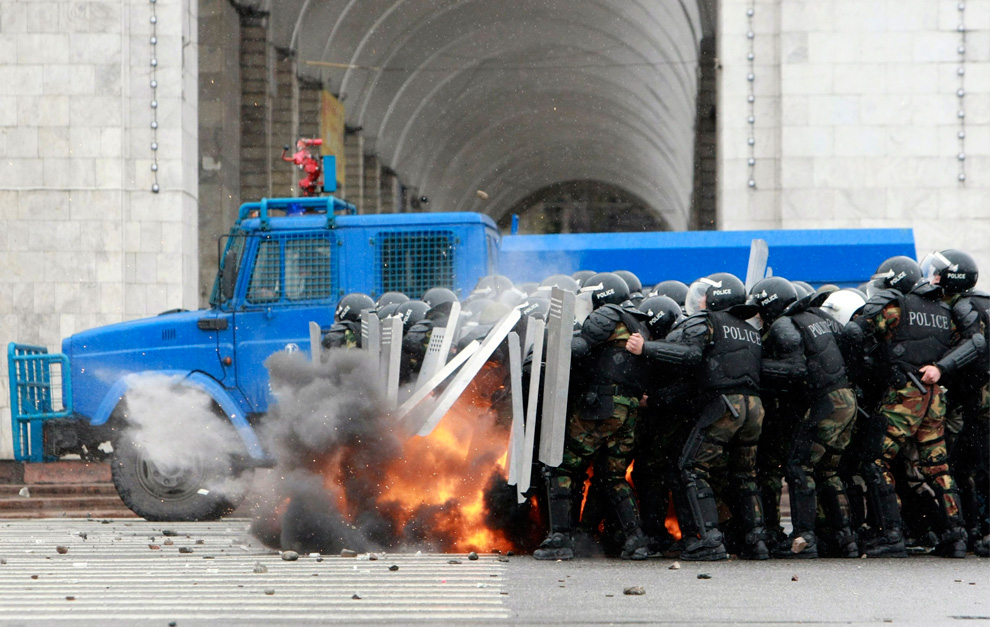

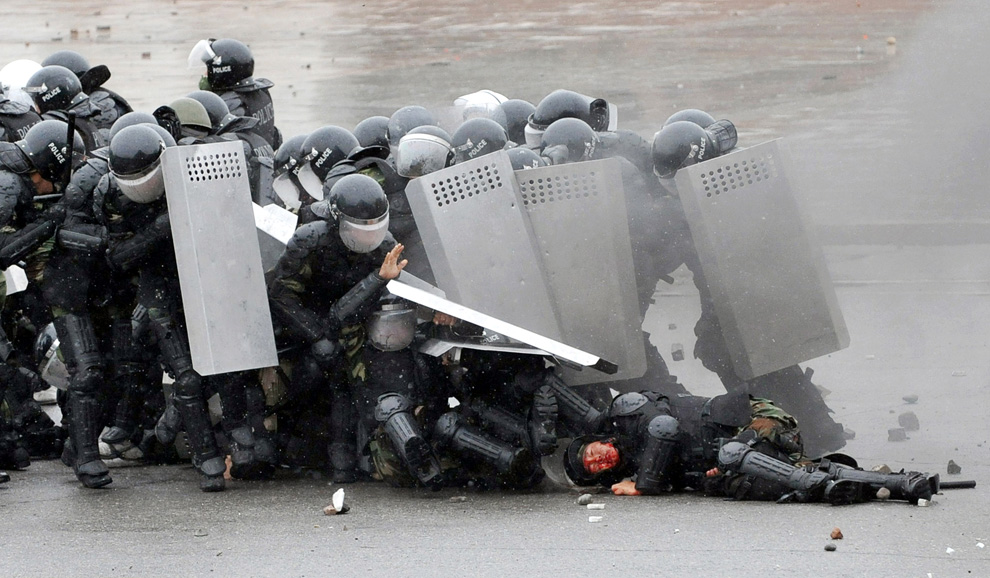
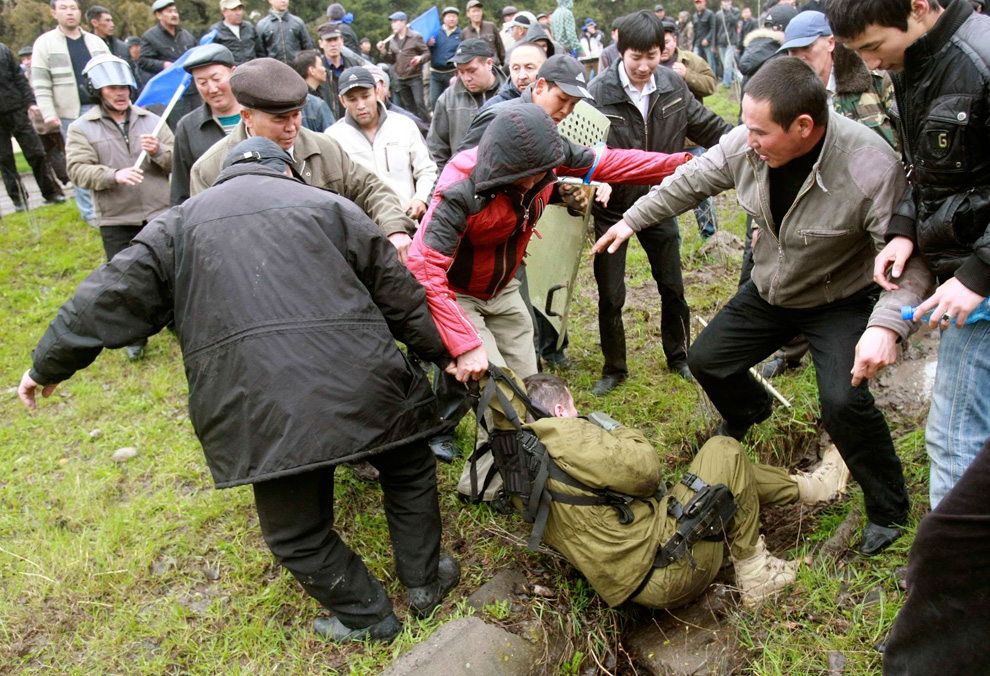
Canadians take it right up the arse though. When they introduced that GST, I was the only protestor on the steps at the Parliament buildings, I should have known right there and then it was hopeless for us.